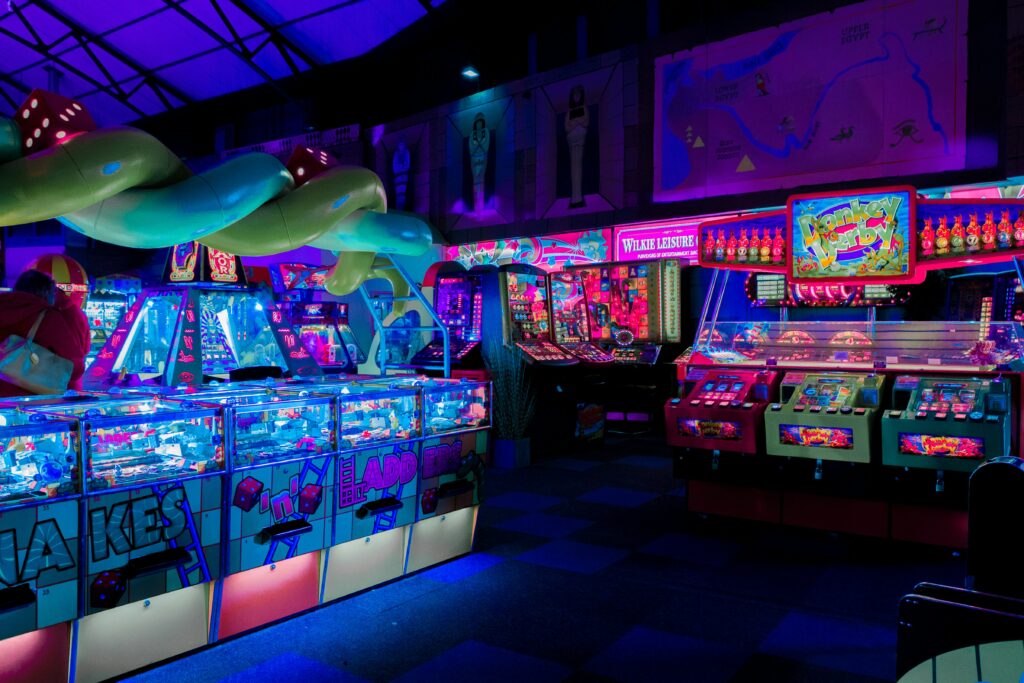
Arcades spent a couple of decades being written off. Home consoles got faster, phones put a whole games library in everyone’s pocket, and the row of cabinets on the high street went dark. That has turned around.
Retro gaming venues are opening in towns and city centres across several continents, often in units that sat empty for years with paper on the windows.
Nostalgia explains part of it. The rest has to do with what these places actually do once they open: they give people somewhere to go, and they pull traffic onto streets that had lost it.
Why Arcades Are Coming Back?
A weighted joystick and a bank of real buttons feel different from a touchscreen, and you can’t get that at home without spending serious money on a cabinet.
Put a room full of people around it, with the noise and the chance to play whoever is standing next to you, and the experience stops being a worse version of console gaming and becomes its own thing.
Operators have updated the format rather than freezing it in 1987. Machines from the eighties and nineties now share floor space with coffee counters and fridges of local beer. Themed nights, tournaments, and club meet-ups fill the calendar between casual visits.
Pricing has been rethought too. Unlimited play wristbands, loyalty cards, and contactless entry have replaced pocketfuls of change, which removes the small friction that used to end a session early.
Online operators work on the same logic. Someone who wants to visit this site for roulette tables is after what the arcade customer is after: easy access, a clear sense of what they’re getting, and enough reason to come back. Both are competing for the same free evening.
Empty Units, New Tenants
Independent operators have been quick to take advantage of cheap leases. Shopfronts that carried ‘To Let’ signs for months now have pixel art in the windows and light spilling onto the pavement after dark.
That matters to neighbouring businesses. An arcade brings people into a street at hours when the shops nearby would otherwise be counting on nothing, and those people buy food, drinks, and whatever else is open on the way past.
Plenty of these venues do double duty. Charity tournaments, indie developer showcases, and launch nights for small studios all end up in the same room as the cabinets.
Owners frequently work with local artists on murals, custom cabinet art, and merchandise, which keeps the money circulating locally and gives the place a look that can’t be copied from a chain.
Design and Layout
Presentation does much of the work when an arcade wants to attract repeat visitors. Neon, bold signage, and period detailing bring people through the door the first time.
What happens inside decides whether they return: somewhere to sit, something to drink, and a floor plan people can read without asking.
Some spaces are built for more than one purpose from the start. Cabinets take one half of the room, and the other half hosts workshops, small exhibitions, or gigs. That flexibility widens the audience and spreads the rent across more than one revenue stream.
How This Fits Wider Entertainment Habits?
Retro arcades sit alongside escape rooms, board game cafés, and cinema events where the audience does something other than sit still. People are choosing leisure they participate in, and arcades qualify without needing to explain themselves.
There’s also the matter of reward you can see. A high score sits on the screen with your initials on it. Tournaments hand out actual prizes. Regulars get perks. After a decade of digital points and badges, the physical version has some novelty again.
Costs and Pressures
Rent, electricity, and machine maintenance are the three things arcade owners complain about, roughly in that order. Cabinets from forty years ago break in ways nobody makes parts for anymore, and the electricity bill for a room full of CRT monitors is not small.
Some owners respond by diversifying their offering, adding bar service, food, repairs for other collectors, or retail alongside the machines.
Local authorities can help or not help. Reduced business rates for independents, arts funding, and support for street events all improve the odds. None of it is guaranteed.
For a lot of the people running these places, the sums were never purely commercial. They own the machines because they like the machines, and they had a specific idea of what a night out could look like before they signed a lease.
Beyond One Country
The pattern repeats in Europe, North America, and East Asia. Cities with large student populations and active arts scenes tend to get there first, since the audience and the cheap premises are usually in the same postcode.
What the successful ones have in common is that they were built around people showing up together rather than around the hardware. Entertainment doesn’t have to be new to work. It has to be worth telling someone about.
Final Thoughts
Retro arcades are doing more than reappearing. They’re changing what a city centre evening can involve, keeping independent operators in business, and giving people a reason to stand in a room with strangers again. With reasonable rents and a bit of local backing, the neon should stay on.
